
Homeowner guide
Insurance Claim Rebuild Guide
What to expect after property damage, from the first call to the final walkthrough.
Start here
Most homeowners only go through this once or twice
Insurance reconstruction is different from a traditional remodel. Before rebuilding can start, there are often inspections, insurance approvals, mitigation work, material selections, permit reviews, mortgage company requirements and several trades to coordinate. All American Builders handles both residential and commercial insurance losses. This guide walks through what typically happens and why.
- 1Loss occurs
- 2Mitigation
- 3Insurance review
- 4Mortgage company (if applicable)
- 5Material selections
- 6Reconstruction
- 7Final walkthrough
Before the rebuild
Mitigation first, then reconstruction
After a loss, a mitigation company handles water extraction, drying, moisture testing, board-up, containment and remediation to stabilize the property. Then reconstruction begins.
We can rebuild after any insurance company, and we work with any mitigation provider. If you need mitigation, we recommend STAT Restoration, the mitigation partner we work with.
- MitigationThe property is stabilized and dried
- Insurance reviewDamage and repair scope are reviewed
- ReconstructionDamaged areas are rebuilt
Why it matters: surfaces can feel dry while framing, subfloor or insulation still hold moisture. Rebuilding over a structure that isn't dry can lead to warped materials, buckled floors and other problems later.
Step by step
The 10-step reconstruction process
- 01
Mitigation company
Emergency mitigation & stabilization
Before reconstruction can begin, the property has to be stabilized to prevent more damage. A mitigation company handles this work, which may include water extraction, drying, board-up, temporary roofing, debris removal, smoke cleanup and mold prevention. We work with any mitigation provider; if you need one, we recommend STAT Restoration, the mitigation partner we work with.
- 02
All American Builders
Inspection & scope development
All American Builders documents the damage, reviews the mitigation reports, assesses structural concerns, identifies materials that need replacing and talks through any upgrades you are considering.
- 03
Insurance carrier
Insurance review & estimate approval
The reconstruction scope is submitted to your insurance carrier. Additional inspections, supplements and scope revisions may be needed before final approval.
- 04
You + AAB
Material selections
You select flooring, cabinets, countertops, paint colors, fixtures, trim and other finishes. Upgrades beyond the insurance scope can be discussed too.
- 05
All American Builders
Material ordering
Materials are ordered once selections are final. Lead times vary a lot and often shape the schedule.
- 06
All American Builders
Permits & approvals
Some projects need permits and inspections before reconstruction starts. Timing depends on the jurisdiction and the scope of work.
- 07
All American Builders
Reconstruction begins
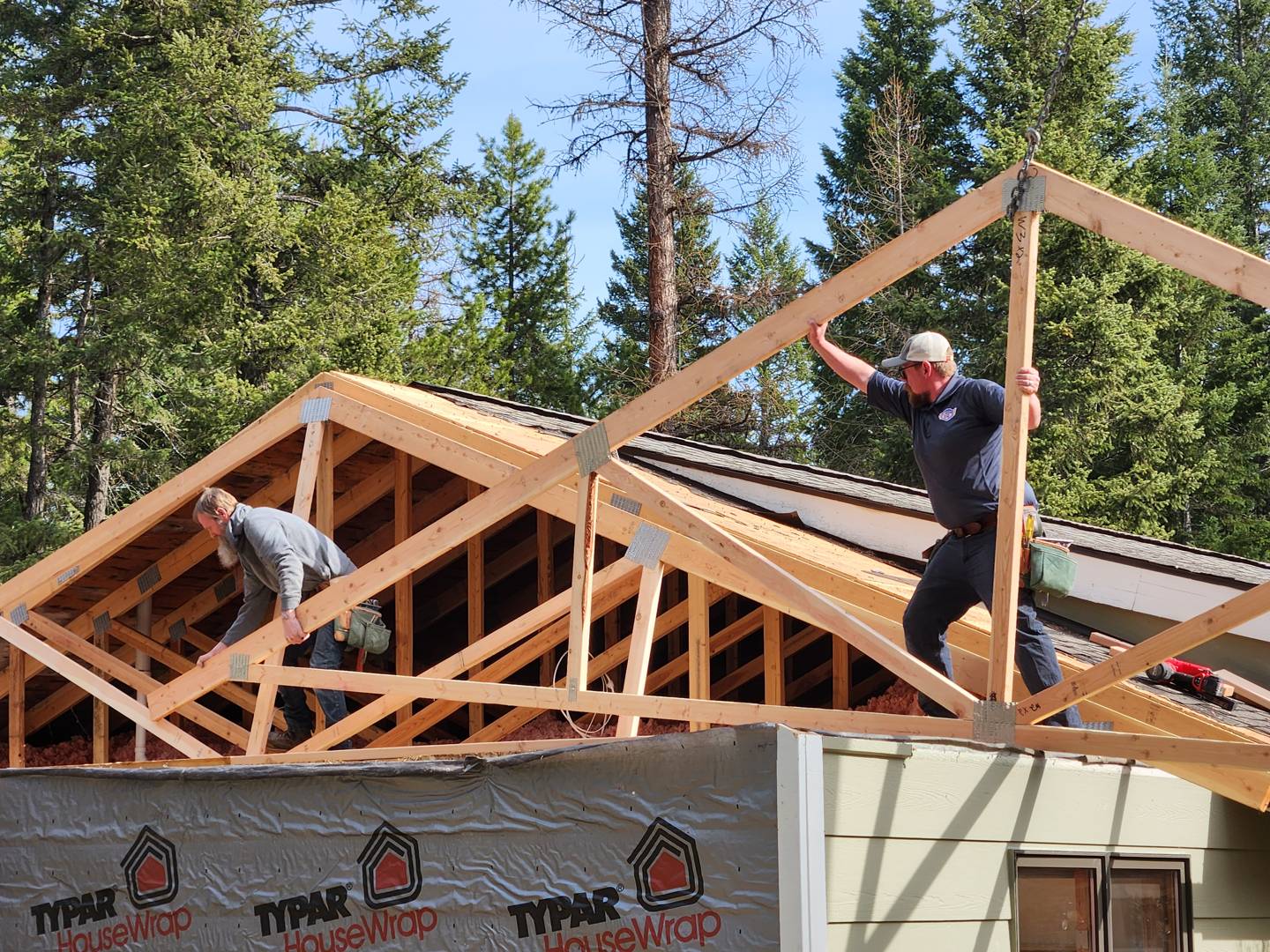
Work can include framing, structural repairs, insulation, drywall, texture matching, painting, flooring, cabinetry and finish carpentry.
- 08
All American Builders
Trade coordination
Electricians, plumbers, HVAC technicians, drywall, painting and flooring trades are scheduled in the right order.
- 09
All American Builders
Final finishes
Hardware, fixtures, touch-up paint, appliances, trim and final cleaning are completed.
- 10
You + AAB
Final walkthrough
We walk through the completed work with you, address any remaining concerns and make sure expectations have been met.
Who does what
Your recovery team
Decision maker
Homeowner
You make the decisions about your home, including who you hire.
Mitigation
Mitigation company
Stops further damage: extraction, drying, moisture testing, board-up, containment and remediation. We recommend STAT Restoration.
Insurance
Insurance adjuster
Reviews the damage and the repair scope under your policy.
Reconstruction
All American Builders
Rebuilds the damaged areas and coordinates the work through the final walkthrough.
Trades
Specialty trades
Electricians, plumbers, HVAC, flooring, roofing and painting, as each project needs.
Timelines
How long does it take?
Typical ranges by size of loss. Every project is different. Construction itself is often only one part of the overall timeline.
| Project size | Typical timeline | Examples |
|---|---|---|
| Small loss | 1–3 months | Small water losses, isolated drywall damage, single-room repairs, minor wind damage, limited flooring replacement. |
| Medium loss | 3–6 months | Multi-room water losses, significant kitchen or bathroom damage, tree damage, larger wind claims. |
| Large loss | 6–12 months | Major water losses, extensive fire damage, structural repairs, multi-story damage, vehicle impact claims. |
| Major loss | 12–24+ months | Complete rebuilds, severe fire losses, extensive structural failures, major commercial losses. |
Why projects take time
Insurance approvals, supplemental claims, mortgage company processing, permits, engineering reviews, material lead times and trade scheduling all influence the schedule. A delay from any one party can move the whole project.
Rural construction reality
Throughout the Flathead Valley and Northwest Montana, trade availability, shipping times, seasonal demand and specialty subcontractor schedules can affect timelines.
Payments & paperwork
Why payment works differently than a remodel
Whether the loss is residential or commercial, insurance reconstruction involves more parties and approvals than a traditional remodel.
| Topic | Traditional remodel | Insurance reconstruction |
|---|---|---|
| Who pays | Homeowner funds the project | Insurance often funds covered repairs |
| Who's involved | Homeowner + contractor | Homeowner + insurance + contractor (sometimes a mortgage company) |
| Payments | Simple payment structure | Funds may be released in stages |
| Approvals | Few outside approvals | Insurance and mortgage approvals may be required |
Deductibles
Your deductible is set by your policy and is your share of the covered loss.
Recoverable depreciation
Many carriers withhold part of the claim value until repairs are completed and documented.
Supplements
Hidden damage found during reconstruction may need more documentation and carrier approval.
Mortgage company
Lenders may require endorsed checks, inspections, lien waivers, contractor documentation or staged releases.
FAQ
10 common questions
The questions homeowners ask most often after a loss.
General information only. This is not legal, insurance or financial advice. Every policy is different, so review your policy and talk with your insurance provider about your specific coverage.
What should I do first after water, fire, storm, or tree damage?
Make sure everyone is safe, then photograph and video the damage before cleanup. Take reasonable steps to prevent more damage, such as shutting off water, tarping, or boarding up, and report the claim to your insurance company as soon as possible. For water damage, a mitigation company handles extraction and drying. We recommend STAT Restoration, the mitigation partner we work with. Keep receipts and notes of every conversation with your insurer.
Can I start repairs before the adjuster inspects?
Temporary repairs that protect the property are generally expected, and many policies require them. Hold off on permanent repairs until you've talked with your insurance company, because the damage usually needs to be documented first. For water losses, reconstruction should also wait until the structure is confirmed dry. Every policy is different, so check with your insurer.
Do I have to use the contractor my insurance company recommends?
In most cases, no. Your insurer can recommend contractors, but you can generally choose the one you trust, unless your policy has a managed-repair endorsement. Whoever you hire, confirm they hold a current Montana construction contractor license, carry liability and workers' comp insurance, and give you a written contract. Avoid anyone pressuring you to sign on the spot.
What is the difference between ACV and RCV, and why is my first check low?
Actual Cash Value (ACV) is the depreciated value of what was damaged. Replacement Cost Value (RCV) is the cost to replace it with materials of like kind and quality. On replacement cost policies, insurers often pay ACV first and release the withheld "recoverable depreciation" after repairs are completed and documented. Ask your adjuster whether there's a deadline to claim it.
How does my deductible work?
Your deductible is your share of a covered loss. The insurance company subtracts it from what it pays, and you pay that amount toward the repairs. It isn't an extra fee on top of the repair cost. Every policy is different, and some carry separate wind or hail deductibles, so check your declarations page.
Why is my mortgage company on my insurance check?
If you have a mortgage, your lender usually has a financial interest in the property, so structural repair checks are often made out to both you and the lender. Contact your lender's insurance claims (loss draft) department to learn how they endorse checks. Some release funds in stages as work is completed and inspected, which can add time to a project.
Why didn't my insurance company pay my contractor's full estimate?
Estimates can differ in scope, measurements, materials, and pricing. Insurance generally pays for covered damage using like kind and quality materials, not upgrades or wear and tear. Often the best next step is for the contractor and the adjuster to talk directly and work through the differences with documentation.
What happens if more damage is found during reconstruction?
Early estimates are often written before walls are opened or flooring is pulled. When hidden damage, code requirements, or updated costs come to light, the contractor documents the additional work with photos, measurements, and line items and submits a supplement for the insurance company to review. A supplement is a normal part of many claims.
What if I disagree with the settlement, or part of my claim is denied?
Start with the written explanation, which should cite the policy language behind each decision. You can ask your adjuster questions and send more documentation, such as photos, measurements, moisture readings, or a contractor's estimate. If you still disagree, your policy may have an appraisal process, and the Montana Commissioner of Securities and Insurance consumer line (800-332-6148) can answer questions about how a claim is being handled.
How long will my project take?
It depends on the size of the loss. As a general guide, small losses often take 1–3 months, medium 3–6, large 6–12, and major losses 12–24+ months. Insurance approvals, mortgage processing, permits, material lead times, and trade scheduling all affect the schedule. In Northwest Montana, shipping times and seasonal demand can add time.
Have a claim or a question about one?
Call or send a few details about your project.